Enterprise Architecture
Capability modeling, target operating models, service catalogues, and TOGAF / NORA 2.0-aligned architecture frameworks.
Senior Business Transformation Consultant
Enterprise Architecture · Product Ownership · CX Design
6+ years across Saudi Arabia, France, and Tunisia. TOGAF, PSPO, PSM, and ISTQB-certified. I help government and private-sector organizations bridge strategy, architecture, and delivery — designing capability models, mapping customer journeys, and holding both to DGA and NORA 2.0 governance standards.
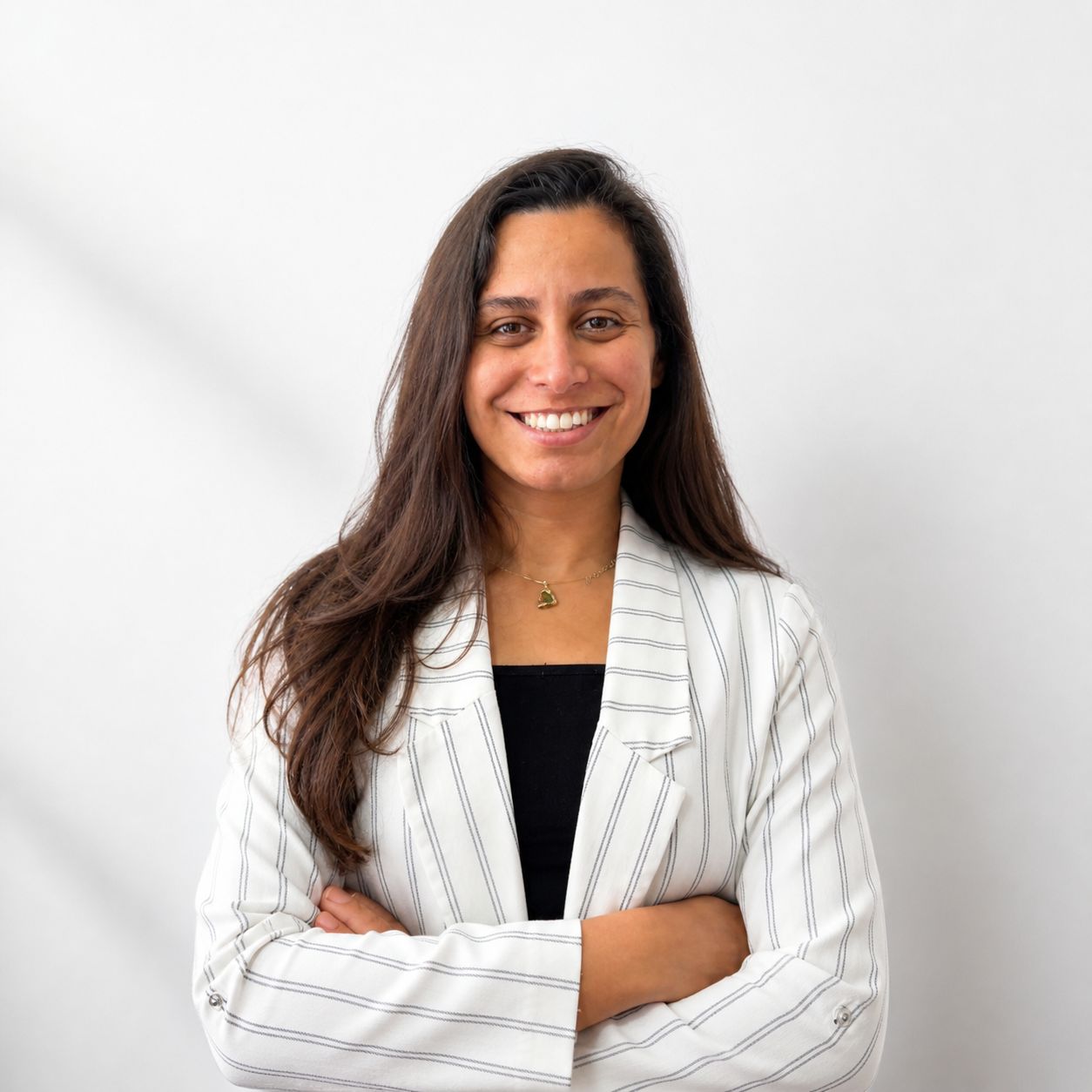
The Thinking Behind the Work
I care about the work. I treat every project as my own — leading execution and bringing people together around a shared ethos. Business is about people, and empathy is a strength when it's backed by unwavering conviction.
01 The Story
I learn systems deeply before I transform them.
My career began in agricultural engineering — a discipline built on understanding complex, interdependent systems and planning for long-term sustainability. I didn't leave that thinking behind when I moved into technology; I brought it with me.
That foundation shapes how I approach enterprise architecture: not as a documentation exercise, but as a way of genuinely understanding how an organization works before proposing how it should change. My work sits at the intersection of strategy, architecture, and Agile delivery.
Saudi Arabia isn't an opportunity I happened into — it's where I've deliberately built my practice. Since 2022 I've worked inside flagship transformation programs, contributing to the governance standards, architecture frameworks, and citizen-facing services that Vision 2030 demands. Trilingual in Arabic, English, and French, I operate fluidly across cultural and institutional contexts — no ramp-up, no translation layer.
The method travels. In 2026 I took the same architecture practice into a healthcare ERP transformation in France — different regulator, different language, same discipline of understanding the system before redesigning it.
Capability modeling, target operating models, service catalogues, and TOGAF / NORA 2.0-aligned architecture frameworks.
Personas, mega and detailed journey mapping, ecosystem blueprints, service classification, and channel design.
Backlog ownership, user-story refinement, sprint coordination, and stakeholder alignment.
Business cases, risk registers, RACI, phase exit and Go/No-Go criteria, and delivery-methodology selection.
Learning experience design and institutional readiness frameworks for AI adoption.
02 Selected Work
Context. REGA regulates Saudi Arabia’s real-estate sector across five business lines — investment, development, brokerage, licensing & professional practice, and protection of rights — while consolidating its services behind a Super App.
Challenge. Each business line carried its own services, channels, and partner institutions, with no shared view of the property lifecycle and no agreed line between what the regulator delivers and what a partner institution does.
Delivered. Mega and detailed customer journeys across every core and cross-cutting business line, with personas, stages, and service touchpoints mapped end to end; a whole-sector Development & Investment Ecosystem blueprint tracing the property lifecycle from land acquisition to exit; service-classification and channel-design standards separating core from partner-delivered services; and business capability models and service-catalogue mappings aligned to REGA’s regulatory mandate.
Outcome. A Research → Mega Journey → Detailed Journey methodology was adopted as the standing approach for every business line, and the capability and service models now support the Super App’s target operating model and roadmap.
Context. NHC CARE, a French healthcare organization, was replacing the ERP behind a 400–500-person field workforce processing roughly 165,000 invoices a month.
Challenge. Patient intake, regulatory and contract billing, logistics, and field operations existed as practice rather than documentation — and the billing engine carried live regulatory exposure under LPPR billing rules, HAS PSDM certification, and RGPD/HDS.
Delivered. Ownership of the business-process architecture workstream: discovery workshops and process demonstrations translated into structured documentation and a process catalog; a business case and risk register surfacing regulatory exposure and the stakeholder landscape upfront; a delivery governance framework covering RACI, phase exit / Go-No-Go criteria, and Agile / Waterfall / Hybrid methodology selection; and test-governance and non-regression recommendations to protect billing integrity through migration.
Outcome. Executive sponsorship was secured on a risk-informed foundation, with a communication plan keeping sponsors aligned across successive project phases.
Context. NHC’s digital platforms were assessed against the Digital Experience Maturity Index (DXMI) — the Digital Government Authority’s national benchmark for government digital services.
Challenge. Maturity scores turn on evidence, not intent. Journeys and touchpoints had to be analysed across entities for real UX gaps, and every claim had to be backed by evaluation evidence that would survive DGA review.
Delivered. Platform assessment against DXMI standards; journey and touchpoint analysis identifying UX gaps, pain points, and service-delivery weaknesses; preparation, validation, and review of DXMI evaluation evidence for accuracy, completeness, and DGA compliance; and practical, data-driven improvement roadmaps mapped to each maturity gap.
Outcome. One of the assessed major platforms placed 4th nationally in the 2026 DXMI ranking.
Context. A ministry overseeing sports facilities, events, youth, and development was undertaking a strategic digital transformation aligned with the DGA and the national NORA 2.0 framework.
Challenge. Four distinct strategic domains, no unified view of capabilities, and no architecture artifacts to support evidence-based investment decisions or EA Qiyas compliance.
Delivered. Current- and target-state architecture across all four domains — capability models, value streams, and governance — plus full CX architecture (personas, citizen journeys, touchpoint analysis) and a complete EA Qiyas evidence package.
Outcome. Deliverables were adopted directly into executive digital-investment decisions; the EA Qiyas submission was completed on time with full documentation coverage.
Context. SDAIA was deploying a comprehensive infrastructure ecosystem — cloud, security, backup, storage, database, collaboration, and DNS — across government entities Kingdom-wide.
Challenge. The infrastructure was sound; adoption was not. Teams lacked the context and structured pathways to adopt the platforms, and existing documentation was architecture-level, not human-level.
Delivered. End-to-end learning experience design for the full Deem ecosystem — role-based curricula for technical and semi-technical audiences, scenario-driven learning paths, and operational content bridging infrastructure concepts to daily government workflows.
Outcome. The framework contributed to government-wide institutional readiness for AI and digital infrastructure adoption under SDAIA's national mandate.
Context. Visit Saudi — the Kingdom's flagship national tourism platform — was scaling its digital products toward Vision 2030 tourism targets, serving millions of domestic and international visitors.
Challenge. Rapid growth created backlog and prioritization pressure, misalignment between business strategy and delivery teams, and inconsistent UX validation across distributed teams.
Delivered. End-to-end backlog ownership with clear prioritization, requirement workshops translated into refined user stories, UX/UI prototype validation against journey maps, and sprint facilitation across distributed cross-functional teams.
Outcome. The platform ranked in the Top 10 of Saudi Arabia's 2024 Digital Experience Maturity Index — an independent national benchmark administered by the DGA.
03 Methods & Toolkit
The frameworks, standards, and tools behind every engagement — built over 6+ years across government, real estate, healthcare, tourism, and technology.
04 Contact
Available for enterprise and business process architecture, digital transformation programs, CX and service architecture, and product ownership consulting — across GCC, MENA, and European markets.